Reflection Post #5 – Accessibility
Accessibility is often mistaken as a niche concern for a small group of people. In reality, it is a fundamental pillar of digital literacy that affects how everyone, from students with permanent disabilities to someone with a temporary injury, interacts with the world.
Charlie Watson had an amazing talk about accessibility and assistive technologies. opened with a powerful framing of why we should care about accessible systems. He offers two primary motivations:
- The Selfless Motivation: Accessibility demands that our systems accept people as they are, rather than forcing people to “fix” themselves to fit our systems.
- The Selfish Motivation: Ability is temporary. Most of us will experience disability at some point in our lives due to age, accident, or illness. By building accessible systems now, you are creating the world you will need later.
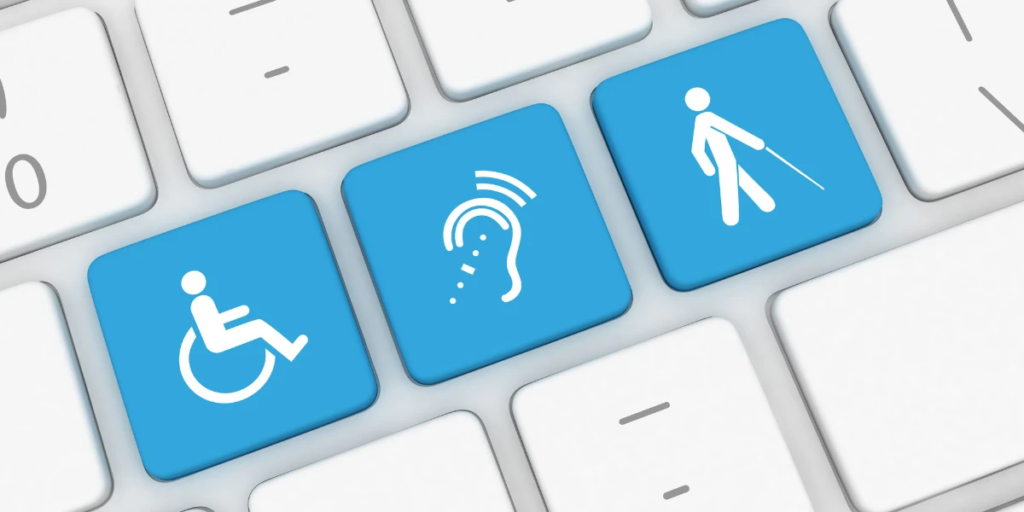
Adaptive vs. Assistive Technology
While the terms are often used interchangeably, there is a technical distinction:
- Assistive Technology (AT): Tools designed to be helpful for everyone but are essential for some (e.g., text-to-speech for reading a text in the car).
- Adaptive Technology: Tools specifically designed for people with disabilities (e.g., a screen reader or a Refreshable Braille Display).
Tools we think are accessible
There are some tools we perceive as helpful but they can actually make new obstacles, for example:
- Auto Generated Captions: Just recently I was watching a video in French with some friends of mine and used auto generated captions to understand what was being said and there were tons of mistakes according to my buddies.
- Bold and Big Text vs Headings: To a screen reader, if the author doesn’t uses a heading and just a big font size, the user wouldn’t understand it’s a heading or can’t “jump” to different sections.
- The Click Here Link: Putting “click here” on the page is not helpful at all for visually impaired users.
Ultimately Accessibility is good design, as Charlie Watson aptly put it, if your product doesn’t work with adaptive technology, your product is bad. Accessibility isn’t an “add-on” or a chore; it is the mark of a skilled digital creator. Whether you are a computer science major building the next big app or a humanities student writing a thesis, remember that your work will eventually be read, heard, or felt by a diverse range of humans. Design for all of them.