Reflection Blog Post #1 – Creative Commons, Open Educational Resources and Copyright
Cable Green’s talk on Creative Commons shows us that copyright plays a huge role in how creative and educational content is produced, shared, and accessed. At its core, copyright is designed to protect creators by giving them control over how their work is used. While this protection is important, it can also create barriers, especially in education, when access to learning materials becomes expensive as Cable Green mentioned in his lecture.
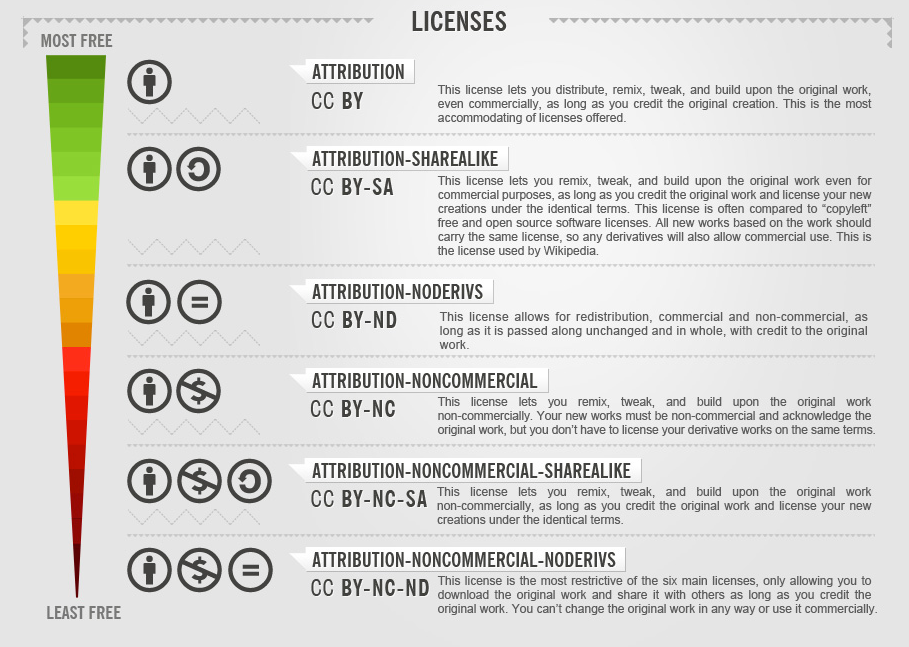
This is where Creative Commons (CC) and open educational resources (OER) come in. Creative Commons licenses offer an alternative to traditional copyright. Instead of an “all rights reserved” approach, Creative Commons allows creators to choose how others can use their work. These licenses make it possible for content to be shared legally and ethically, while still respecting the creator’s intentions. Below is an image of the licenses you can have with Creative Commons, the following image has an Attribution-Sharealike license:
One of the main takeaways from the lecture was the benefits of Creative Commons in education cost. School districts and universities spend millions of dollars every year on textbooks and learning resources. By adopting open textbooks and openly licensed materials, schools could save a significant amount of money, funds that could instead be used for technology, student support, or hiring more educators. Open books don’t just lower costs, they also make education more equitable by ensuring that all students have access to the materials they need from day one.
Cable Green mentioned the Creative Commons content is often explained through the 5 R’s, which describe the permissions that open licenses enable:
- Retain: the right to keep copies of the content
- Reuse: the right to use the content in a wide range of ways
- Revise: the right to adapt or modify the content
- Remix: the right to combine the content with other materials
- Redistribute: the right to share the content with others
One quote that really stuck with me from Cable Green was, “Buy what you need, own what you buy and share what you own,” because it perfectly sums up what feels broken about how educational resources work today. We often pay a lot for content we can’t keep or share, and this quote highlights a more practical and fair approach.
Ultimately, Creative Commons is not just about saving money or avoiding copyright issues. It’s about rethinking how knowledge is shared and recognizing that education works best when ideas are accessible, adaptable, and built together.